

















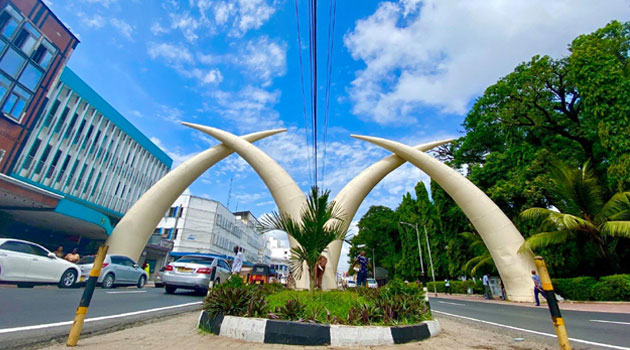

MOMBASA, Kenya, Aug 29 – Mombasa has been named among the eight global winners of the inaugural Bloomberg Philanthropies Initiative for Global Road Safety Speed Challenge, earning a Bronze Award for its road safety efforts.
The city was recognized for implementing a national speed limit of 50 km/h on urban roads, constructing speed humps and raised pedestrian crossings near five schools, and rolling out a media campaign titled “Slow Down, Speeding Ruins Lives.”
The Bloomberg Philanthropies Initiative announced the winners in New York this week, noting that from June 2023 to March 2025, cities and states within the program were tasked with adopting the World Health Organization’s (WHO) recommended speed limits – under 50 km/h in urban areas and under 30 km/h in high-risk zones such as schools and hospitals – while implementing strategies to reduce dangerous speeding.
Gold winners will receive $100,000, silver winners $75,000, and bronze winners $50,000 to sustain and advance their road safety programs.
Gold winners include Addis Ababa, and Ethiopia, Bogotá, Colombia. While silver winners were Bengaluru, India, Buenos Aires, Argentina and Guadalajara, Mexico, other bronze top performers were Kampala, Uganda and Quito, Ecuador.
Michael R. Bloomberg, founder of Bloomberg Philanthropies and WHO Global Ambassador for Noncommunicable Diseases and Injuries, emphasized the urgency of tackling speeding.
“Speeding kills 1,600 people every day. In fact, it’s a leading cause of preventable injuries and deaths worldwide,” he said. “Through the Speed Challenge, we’re shining a spotlight on the most effective actions of winning cities – and the urgent need for more to follow their lead.”
According to the World Bank, speeding is responsible for 600,000 deaths annually, half of the world’s 1.19 million traffic fatalities. WHO notes that higher speeds significantly increase the risk of serious injury or death in a crash.
Since 2007, the Bloomberg Philanthropies Initiative for Global Road Safety has supported evidence-based interventions in more than 50 cities and provinces, advocated for stronger national policies in 21 countries, and improved vehicle safety standards in four regional markets – work that has saved an estimated 900,000 lives.