




















OCT 4 – Big taxes will be imposed on imports of electric vehicles from China to the EU after the majority of member states backed the plans.
The move to introduce tariffs aims to protect the European car industry from being undermined by what EU politicians believe are unfair Chinese-state subsidies on its own cars.
Charges of up to 45% are to be enforced on electric cars made in China for the next five years, but there have been concerns such a move could raise electric vehicle (EV) prices for buyers.
The decision, which split EU member states such as France and Germany, risks sparking a trade war between Brussels and Beijing, which has condemned the tariffs as protectionist.
China has been counting on high-tech products to help revive its flagging economy and the EU is the largest overseas market for the country’s electric car industry.
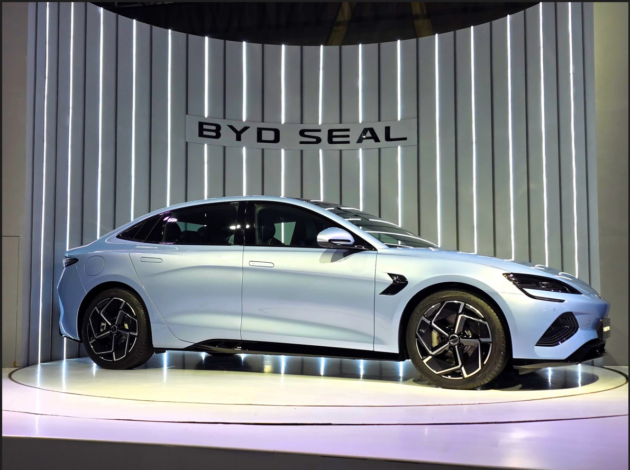
Its domestic car industry has grown rapidly over the past two decades and its brands, such as BYD, have began moving into international markets, prompting fears from the likes of the EU that its own companies will be unable to compete with the cheaper prices.
The EU imposed import tariffs of varying levels on different Chinese manufacturers in the summer, but Friday’s vote was to decide if they were implemented for the next five years.
The charges were calculated based on estimates of how much Chinese state aid each manufacturer has received following an EU investigation. The European Commission set individual duties on three major Chinese EV brands – SAIC, BYD and Geely.
EU members were divided on tariffs. Germany, whose car-manufacturing industry is heavily dependent on exports to China, was against them. Many EU members abstained in the vote.
German carmakers have been vocal in opposition. Volkswagen has said tariffs are “the wrong approach”.
However, France, Greece, Italy and Poland were understood to be in favour of the import taxes. The tariffs proposal could only have been be blocked if a qualified majority of 15 members voted against it.
On Friday, SAIC – which owns the MG brand – said it would not change the price tags of its electric vehicles this year, regardless of the outcome of the vote.
Germany’s top industry association, BDI, called on the European Union and China to continue trade talks over tariffs to avoid an “escalating trade conflict”.
The European Commission, which held the vote, said the EU and China would “work hard to explore an alternative solution” to the import taxes to address what it called “injurious subsidisation” of Chinese electric vehicles.
‘Serious concerns’ over UK sales
Figures show that in August this year, EU registrations of battery-electric cars fell by 43.9% from a year earlier.
In the UK, demand for new electric vehicles hit a new record in September, but orders were mostly driven by commercial deals and by big manufacturer discounts, according to the industry trade body.
Mike Hawes, chief executive of the Society of Motor Manufacturers and Traders (SMMT), said firms had “serious concerns as the market is not growing quickly enough to meet mandated targets”.
The industry has warned that drivers need better incentives to buy electric to help manufacturers ahead of the planned ban on sales of new petrol and diesel vehicles. Under the Conservative government the deadline for this ban was pushed back to 2035 from 2030, but Labour has pledged to bring it back to 2030.
Car makers are required to meet electric vehicle sales targets. Under the Zero Emission Vehicle (ZEV) mandate, at least 22% of vehicles sold this year must be zero-emission, with the target expected to hit 80% by 2030 and 100% by 2035.
Manufacturers that fail to hit quotas could be fined £15,000 per car.
The industry, including bosses of BMW, Ford and Nissan, wrote to Chancellor Rachel Reeves on Friday saying the industry was likely to miss these targets.
It said economic factors such as higher energy and material costs and interest rates had meant electric cars remained “stubbornly more expensive and consumers are wary of investing”. The average cost to buy an electric car in the UK is around £48,000.
They said a “lack of confidence” in the UK’s charging infrastructure was another barrier to encourage people to switch to electric.
By BBC