
















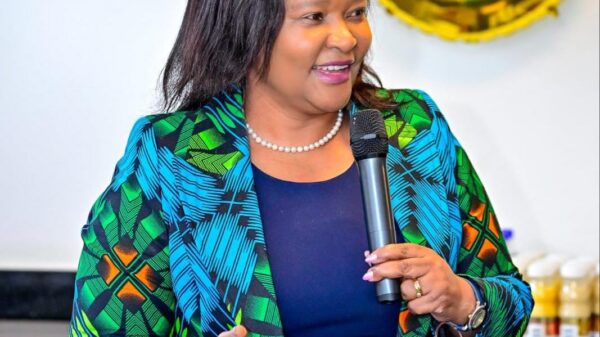



NAIROBI, Kenya, July 4 – The Government of Kenya has unveiled initiatives to increase domestic health financing and achieve Universal Health Coverage (UHC).
Kenya’s private sector and civil society representatives have also committed to supporting the Government’s efforts.
These commitments were made at the ‘Kenya High-Level Dialogue on Health Financing for Universal Health Coverage’ stakeholder event, the first ever held in Kenya, where representatives from the Government, Ministry of Health and The National Treasury, policymakers, private sector, and civil society convened to discuss ways to better work together to mobilize domestic financing for healthcare and speed up progress towards UHC.
To bolster funding for health programs, the Government committed to diversifying funding sources by improving tax revenues, including exploring dedicated taxes for healthcare, leveraging social health insurance, and encouraging more private investment into the health sector.
To improve efficiency in health spending, the Government also committed to working on measures to strengthen Public Financial Management (PFM), particularly healthcare budget formulation, execution, monitoring, evaluation, and accountability.
The Government also committed to fostering closer collaboration with the private sector, by streamlining the contribution of resources from the sector and better leveraging private expertise, innovation, and resources towards healthcare.
As of 2022, Kenya’s budget allocation to health as a share of the total Government budget stood at 11 percent, slightly below the benchmark commitment of 15 percent, set in the Abuja Declaration in 2013.
At the same time, health inequity in Kenya remains high, with individuals from the wealthiest income bracket being over four times more likely to access modern healthcare services compared to those from the poorest income bracket, thus underscoring the urgent need for UHC to ensure equal access to healthcare for all citizens, regardless of their socioeconomic status.
Supporting the Governments commitments, the private sector committed to broadening financing opportunities and expanding partnerships to drive impact in the healthcare sector.
Private sector representatives also committed to facilitating easier credit access and channeling more innovative capital tailored to the sector’s needs.
The private sector also recommended tax exemptions on medical products and commodities, such as dialysis kits and filters, to ease the cost burden on these items and increase ease of access by the public.
The dialogue also saw civil society make a series of commitments and recommendations to support the Government in streamlining domestic health financing.
For example, to mobilize more funds for health, civil society called for exploring innovative revenue generation strategies, expanding National Health Insurance Fund (NHIF) coverage, and engaging in research and public awareness campaigns.
Civil society also emphasized the importance of transparency in financial reporting, calling for inclusion of CSO representatives on public boards, and meaningful citizen engagement in decision-making processes regarding health financing and management.
Attaining UHC is also an integral component of Kenya’s Vision 2030, with the aim to ensure that all Kenyan citizens have access to affordable and quality healthcare services.
The Government’s commitment to UHC is anchored on three financing pillars namely, fully publicly funded primary healthcare, a universal, seamless health insurance system consisting of mandatory national insurance, and the establishment of a national fund to cover costs for chronic and catastrophic illnesses and injury costs for those who can’t easily afford treatment.