


















DOHA, Qatar, Mar 2 – Leaders from nations mired in a worsening poverty trap will make a new plea for assistance at a summit starting in Doha Sunday, battling for world attention against rival disasters.
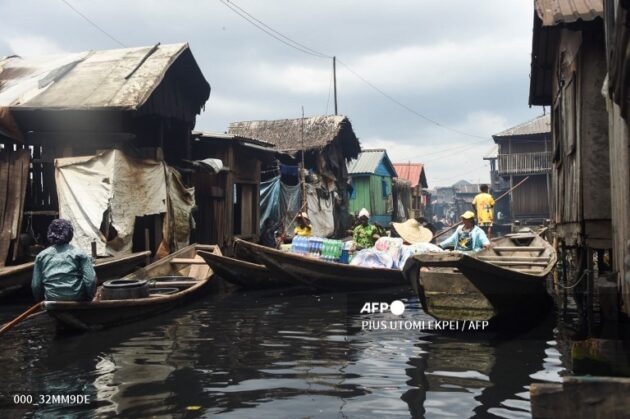
Fallout from the coronavirus pandemic, the Ukraine war’s impact on food and fuel supplies and the costly battle against climate change are bad for rich countries but significantly worse for the 1.3 billion people — 14 percent of the world population — in the 46 Least Developed Countries (LDCs).
“The multiple crises swirling today have their most dangerous point in the LDCs,” said Agnes Chimbiri-Molande, Malawi’s ambassador to the United Nations and spokesperson for LDCs at the UN.
Presidents and government leaders from the 33 Africa nations, 12 from the Asia-Pacific and Haiti in the Caribbean will meet five decades after the UN created the LDC category in a bid to narrow the global wealth gap.
The Fifth United Nations Conference on the Least Developed Countries (LDC5) was twice postponed because of coronavirus. A plan of action was agreed at the UN general assembly last year, and no major cash pledges are expected at the Qatar meeting.
The presidents will be there — with thousands of experts and activists — to make sure past promises are kept, according to specialists.
“The leaders are going to the summit to give the campaign a new push,” said Matthias Boussichas, programmes manager at the Foundation for Studies and Research on International Development (FERDI) based in France.
He said the international community must attack the “structural handicaps” to trade and growth that the LDCs have been fighting for decades, rather than the recent crises.
Since 1971, the number of LDCs has nearly doubled from the original 24 given trade and market privileges, aid and easier access to finance.
Now the average wage in Afghanistan is measured in hundreds of dollars a year, while in the United States it is more than $65,000, according to World Bank figures.
Barely half the world’s poorest have electricity and only one in five can plug in to the internet, according to the UN.
– ‘Graduation’ day –
Many governments say that the LDC tag is a “stigma”.
Tiny Bhutan is this year expected to become the latest state to start “graduation” from LDC. Bangladesh, Laos, Nepal, Angola, Sao Tome and Principe and the Solomon Islands are set to follow by 2026.
They will slowly lose their privileges and all will need help even after their elevation, according to Boussichas, whose non-profit institute advises the UN and governments.
Some 500 company chief executives from around the world are expected at the meeting to boost private investment in poor nations, according to Rabab Fatima, the UN high representative for the LDCs.
Microsoft committed on Thursday to providing internet to 20 million more people in Africa, adding to a promise of 10 million made last year as part of a campaign to connect 100 million people in Africa by 2025.
Microsoft president Brad Smith told AFP he questioned what he acknowledged was a “big goal” when he heard about it last year.
“It requires support from governments, we have been working with governments across Africa, it requires some financial investments. But it is an achievable number,” he said.
“Part of what they need is trade and investment and not solely foreign aid. And we see digital technology as a potential catalyst for investment, trade and economic growth,” Smith added.
With growing demands on wealthy nations’ budgets, the UN and aid specialists have sought to put a brave face on summit hopes. But experts like Boussichas say progress even before coronavirus was “disappointing”, and warn of growing problems if action is not taken.
“If we leave them behind… the burden will fall on the international community,” said the UN’s Fatima.