


















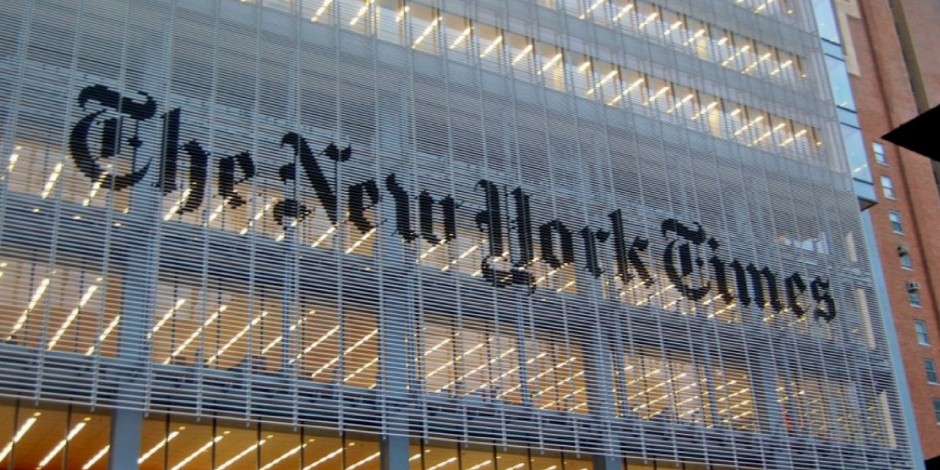
New York Times Editor Michael Slackman was forced to apologize after publishing a job advert that was painting Africa in a bad light.

According to the advert that was circulated last week, the publication was seeking for journalists to cover ‘conflict’ and ‘unexpected stories of hope’ in the region.
The advert read in part: “The ideal candidate should enjoy jumping on news, be willing to cover conflict, and also be drawn to investigative stories. There is also the chance to delight our readers with unexpected stories of hope and the changing rhythms of life in a rapidly evolving region…”
“Our Nairobi bureau chief has a tremendous opportunity to dive into news and enterprise across a wide range of countries, from the deserts of Sudan and the pirate seas of the Horn of Africa, down through the forests of Congo and the shores of Tanzania,” read part of the job description.
The New York Times was looking for the Nairobi Bureau Chief who would cover stories across several countries in the continent.
Following the circulation of the advert, thousands of livid Kenyans on Twitter expressed their disappointment and anger towards it.
Issuing his apology, the editor wrote to a group called LAM sisterhood, who had captured a video of themselves criticizing the New York Times boss.
He wrote: “Dear Lam Sisterhood. Thank you. I loved it (the video making fun of the job advert) and learned from your dramatic reading. I deserved it.
“That job posting was my doing and I want to explain what happened. We are currently looking for three correspondents to cover Africa and I saw this as an opportunity to find the best there is,” he added, explaining why the advert was published.
“But I plead guilty to taking a short cut: Rather than write a new job description, a posting from about 18 months went out. I gave it a cursory look and approved it. Mea Culpa,” he apologized.
He later went ahead to assert that the New York Times is committed to covering Africa, not as if it were a stereotype but because it matters.
This is not the first time that the world-renowned New York Times has angered Kenyans, early this year as reported by The Sauce after the Riverside terrorist attack at the Dusit D2 hotel, the New York Times writer Kimiko Freytas-Tamura published an article alongside photos of dead bodies.