











NAIROBI, Kenya Jun 9 – The Laikipia County Government has formally opposed plans to establish an Ebola quarantine and isolation facility within the county, citing concerns over public health safety, economic impact, governance procedures and the welfare of children living and studying near the proposed site.
In documents filed before the High Court, Laikipia County Executive Committee Member for Health Albert Taiti says the county supports national efforts to strengthen preparedness for infectious disease outbreaks, but argues that the proposed project has not met the necessary constitutional and public health standards.
According to the county government, the proposed facility would directly affect local residents, nearby institutions, emergency response systems and county health structures, yet county authorities were allegedly excluded from critical decision-making processes.
Taiti states that Laikipia already faces financial and infrastructural challenges in delivering healthcare services and may struggle to adequately manage a major infectious disease emergency such as Ebola.
While acknowledging the importance of national preparedness measures, the county argues that projects involving highly contagious diseases require extensive scientific evaluation, transparent planning and broad stakeholder involvement before implementation.
The affidavit further claims that the proposed facility poses potential risks to residents’ constitutional right to the highest attainable standard of health under Article 43 of the Constitution.
Laikipia County also accuses the National Government of failing to conduct adequate consultations before selecting and announcing the proposed site for the quarantine and isolation centre.
According to Taiti, the county administration was not meaningfully involved in discussions concerning site suitability, emergency planning, risk assessment or coordination measures despite constitutional requirements for cooperation between the two levels of government.
“The absence of meaningful consultation undermines the principles of cooperative governance and devolution as entrenched in the Constitution,” the affidavit states.
The county has also warned that the project could negatively affect Laikipia’s tourism-driven economy.
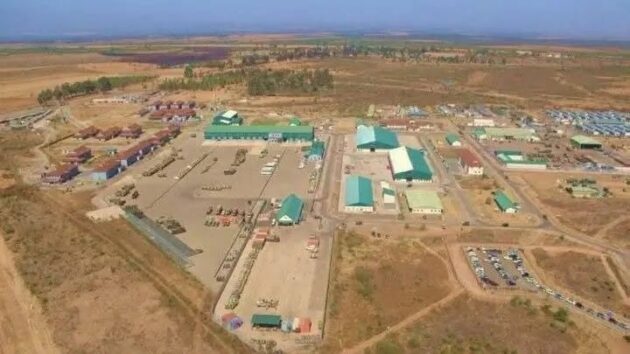
Officials argue that Nanyuki Town, located near the proposed facility at Laikipia Air Base, is a major tourism and business hub that supports thousands of livelihoods through hospitality, conservation and related sectors.
The county notes that Laikipia hosts internationally recognised tourist destinations including Ol Pejeta Conservancy, Ol Jogi Conservancy and Mount Kenya National Park.
According to the affidavit, some hotels have already reported booking cancellations following reports about the proposed Ebola facility.
The county government fears that continued uncertainty surrounding the project could damage the region’s image as a tourism destination and trigger economic losses and job cuts.
Another major concern raised relates to the location of the proposed facility within the Kenya Air Force Base in Nanyuki, where Laikipia Airbase Primary School and Laikipia Airbase Junior School operate.
Taiti argues that situating an Ebola quarantine and isolation centre within the same compound frequented daily by schoolchildren raises serious child safety and emergency preparedness concerns.
The county says no evidence has been provided to confirm that child-focused impact assessments, school safety audits, evacuation procedures or specialised risk management plans were undertaken before the site was selected.
Citing Article 53(2) of the Constitution, the county insists that the best interests of children must remain a primary consideration in any decision affecting them.
Laikipia further argues that residents have not received sufficient information regarding the scientific basis used to identify the site, containment measures to be implemented or long-term public health safeguards associated with the facility.
The county is now asking the High Court to subject the project to detailed judicial review to ensure full compliance with constitutional provisions on public participation, intergovernmental consultation, public safety and precautionary health measures.
Taiti says the court should also guarantee that the welfare of schoolchildren, local communities and the broader interests of Laikipia residents are adequately protected before any project moves forward.