
















China is rapidly emerging as one of the world’s most powerful innovation ecosystems, leading in electric vehicles, artificial intelligence, drones, advanced manufacturing, smart infrastructure and green technology.
The transformation is unfolding at remarkable speed and scale.
Today, multinational companies are no longer going to China merely to manufacture products cheaply or access a vast consumer market. Increasingly, they are going there to collaborate, innovate, and learn from one of the world’s fastest-moving technology environments, and to manufacture high-value-added products for export to global markets. For example, International companies already account for around two-fifths of China’s car exports to Europe. China is becoming a laboratory for the future.
One of the clearest examples is intelligent manufacturing. Across the country, factories powered by AI, 5G and big data are transforming industrial production. By the end of 2025, China had built more than 35,000 smart factories at different levels, making it the world’s largest intelligent manufacturing application base.
The transition from “Made in China” to “Intelligently Made in China” is no longer aspirational rhetoric. It is reshaping production through automation, efficiency, precision and digital integration.
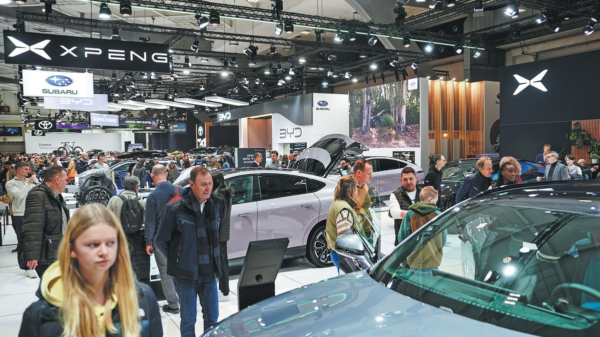
The electric vehicle sector offers another powerful example of China’s technological dominance. China now accounts for more than 70 per cent of global EV production and 67 per cent of global EV sales. In 2025 alone, the country exported more than 2.62 million electric vehicles, while electric cars accounted for more than half of all vehicle sales in the Chinese market.
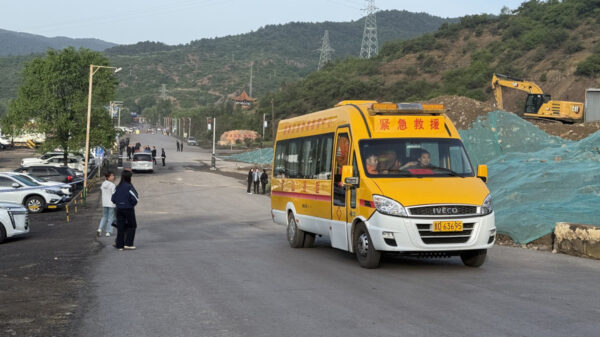
China has also become the global leader in electric buses and commercial EVs, with more than 95 per cent of the world’s electric bus fleet operating there.
But China’s innovation revolution extends far beyond automobiles and factories.
In Shenzhen, widely regarded as China’s Silicon Valley, companies are redefining the global drone industry. Chinese firms are leading the world in intelligent drone clustering technology, where large numbers of drones coordinate autonomously to perform highly sophisticated tasks.
Drone performances developed by Shenzhen companies have captivated audiences globally, from Riyadh to the Palace of Versailles during the Paris Olympic Games. Chinese companies are now operating in dozens of countries and rapidly expanding internationally.
Industry experts estimate that Chinese drone technology is three to five years ahead of many global competitors.
The significance of these advances extends well beyond entertainment. Intelligent drone coordination has major industrial, logistical and military applications, highlighting China’s growing leadership in next-generation systems integration.
At the same time, Chinese companies are taking centre stage in what experts are calling the “IQ Era”, a technological phase where artificial intelligence becomes deeply embedded into communications, logistics, infrastructure and industrial systems.
At the 2026 Mobile World Congress in Barcelona, Chinese firms stood out not simply for individual innovations, but for showcasing entire intelligent ecosystems. AI is increasingly being integrated directly into networks capable of self-optimisation, predictive maintenance and intelligent resource management.
Factories, ports, logistics hubs and critical infrastructure are becoming smarter, faster and increasingly autonomous.
What makes China’s rise particularly significant is not only the innovation itself, but the speed and scale at which it is deployed. China’s advantage lies in its ability to commercialise technology rapidly, integrate supply chains efficiently and scale industrial production faster than most of the world.
China’s growing dominance is also being driven by its ability to integrate innovation into everyday life faster than most economies. In many Chinese cities, consumers can move through entire days using AI-powered platforms for transport, banking, shopping, healthcare and public services without using cash or physical documents. High-speed rail networks, automated warehouses, smart ports and digitally connected urban systems are becoming part of daily life rather than futuristic concepts.
This real-world integration of technology at scale gives Chinese companies a powerful advantage. They are able to test, refine and commercialise innovation in a massive live environment.
China’s leadership across multiple technology sectors is also creating opportunities for developing nations, particularly in Africa, to accelerate their own industrial and technological transformation.
African development experts increasingly see China’s progress in artificial intelligence, robotics, green energy and infrastructure development as offering valuable lessons for countries seeking to modernise industries, expand clean energy access and accelerate economic transformation.
This transformation did not happen by accident. It reflects decades of investment in infrastructure, education, industrial policy, research and innovation ecosystems designed to support long-term technological advancement. It reflects China’s consistent growth philosophy to prioritize innovation and at the same time reinforce the manufacturing base.
China’s rise as a global innovation powerhouse is also reshaping the balance of global economic influence. Increasingly, the future of technology is not being designed exclusively in Silicon Valley or Europe. It is also being built in Shenzhen, Hangzhou, Shanghai and Beijing.
The world is beginning to recognise that modern China is no longer simply exporting products. It is exporting technology, industrial systems, innovation models and the architecture of the future economy itself.
And in many sectors, China is now setting the pace for the rest of the world.