





















March 5 – The legacy of Maulana Rumi remains undiminished centuries after his passing. While his body rests in Turkey, his soul, through his verses, continues to inspire millions across continents.
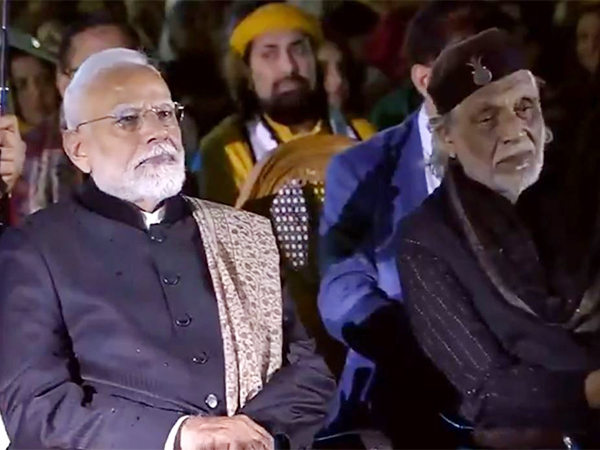
On a drizzling Friday evening in New Delhi, Indian Prime Minister Narendra Modi invoked the spirit of Rumi and Sufism at an annual event dedicated to another revered mystic-poet, Hazrat Amir Khusro.
The Jahan-e-Khusro festival, organised by the Rumi Foundation, is spearheaded by Sufi filmmaker, artist, fashion designer, and erstwhile royal Muzaffar Ali. Ali has already produced a documentary on Rumi’s life and plans to develop it into a full-scale international feature film.
As Modi rose to deliver his address, the rain intensified. Unfazed, he remarked that it was a divine sign to make the evening even more soulful. Addressing an audience that included Delhi’s elite and foreign dignitaries, the prime minister captivated listeners by fluently quoting Khusro, Rumi, and Ghalib. He highlighted the enduring power of their words, noting that he often references them in speeches abroad.
Modi also cited Rumi’s wisdom on resolving conflicts at their inception: “Raise your arguments, not your voice. A flower blossoms in rain, not in the sound of thunder.”
Rumi and India: A Timeless Connection
Is Modi alone in his admiration for Sufi mystics, particularly Rumi? Certainly not. As he pointed out, India has long been a land receptive to the ideals of love and unity that form the essence of Sufi philosophy.
Rumi famously stated that he belonged neither to the East nor the West, but to the entire universe. Modi noted that this perspective aligns seamlessly with India’s Vedantic traditions and his government’s foreign policy vision of Vasudhaiva Kutumbakam—the belief that “the world is one family.”
Jalaluddin Rumi also shares a mystic connection with India. His spiritual guide, Shamsuddin of Tabriz, to whom he dedicated Diwan-e-Shams-e-Tabrizi, is believed to have Indian ancestry. Orientalist H.A. Rose suggests that Shamsuddin may have identified with Shams Tabriz of Multan, a revered saint of the time. Turkish scholar Dr. Rasih Guven supports this theory, stating that Shamsuddin’s father, Khawand Alauddin, was originally named Govind—a Sanskrit term—before converting to Islam.
Though Rumi’s poetry was written in Persian and reflects his background as a Muslim jurist and mystic, his works have transcended linguistic, religious, and cultural barriers. The first printed edition of Masnavi (in Persian) appeared in Cairo in 1835. However, Rumi’s influence reached India much earlier. In the 14th century, Hazrat Nizamuddin Auliya, a revered Chishti Sufi, wrote a commentary on Masnavi.
In modern India, Rumi’s impact is most evident in the works of poet and philosopher Muhammad Iqbal, who regarded him as his spiritual guide and the “prince of the caravan of love.” Iqbal’s encounter with Rumi’s influence was deepened during his studies in England, where he discovered that European Renaissance thinkers—including Friedrich Hegel, Karl Marx, Goethe, and Schopenhauer—had also drawn inspiration from Rumi’s philosophy.
Dr. Shujaat Ali Quadri, who has served as Chairman of the Muslim Students’ Organisation of India since 2021 and previously as its National President (2017-2021), is also the spokesperson of All India Tanzeem Ulama-e-Islam.