






















NAIROBI, Kenya, May 13 – betPawa is targeting grassroots football development in Kenya, highlighting the economic pressure facing community sport systems where thousands of young players remain active but under-resourced, limiting the conversion of talent into sustainable livelihoods.
The betting firm has committed Sh6.7 million to the initiative, which spans 25 teams across the country and reaches 575 players in both men’s and women’s squads.
Each player has received a full kit comprising jerseys, shorts and socks, while teams have been supplied with match balls, training bibs and goalkeeper gloves aimed at improving training structure and match readiness.
The intervention exposes a deeper issue in Kenya’s informal sports economy, where most grassroots teams operate outside formal funding structures.
Many rely on irregular community contributions, small-scale local sponsorships or player fundraising to meet basic operational needs such as equipment, transport and training costs.
This financial instability continues to constrain player development and limits the ability of sport to function as a reliable income pathway for youth and coaches.
Among the beneficiary teams are Maungu All Stars FC, Maringo United, Masimba Queens, Kibagare Girls FC, Kangeta Youth FC and Shimanzi FC, reflecting a broad cross-section of men’s and women’s football programmes across different regions.
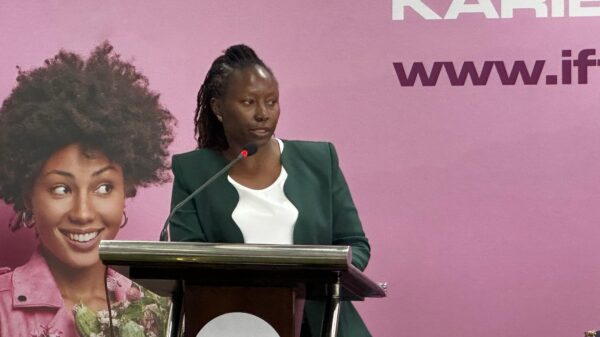
“Talent is not in short supply. What is missing is consistent access to structure and resources that allow that talent to mature into opportunity,” said Borah Ndanyungu, Head of Local Marketing and CSR at betPawa Kenya.
“When players are properly equipped, it changes how they train and how they value their own potential.”
Women’s teams account for a significant share of the beneficiaries, pointing to gradual but uneven progress in inclusion within community football.
While the programme is expected to improve organisation and professionalism at the grassroots level, it also underscores a broader economic reality: Kenya’s sports pipeline remains largely informal, with limited pathways to convert participation into stable and scalable income opportunities.