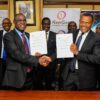























NAIROBI, December 9 – The National Social Security Fund has completed the sale of its 27 percent stake in East African Portland Cement Company (EAPCC) to Kalahari Cement Ltd, a firm ultimately owned by the Amsons Group.
The transaction, approved by the Capital Markets Authority, the Competition Authority of Kenya and the Ministry of Mining, gives Kalahari a 69 percent controlling stake in EAPCC.
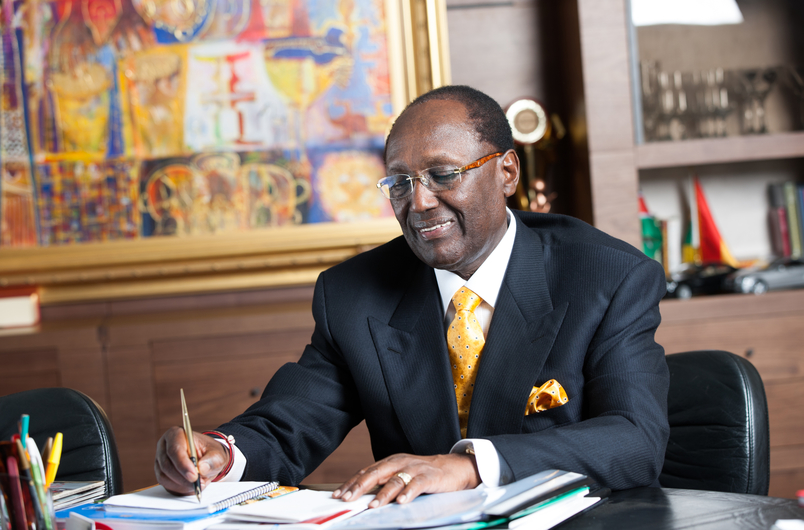
Explaining the decision to take majority ownership, Amsons Group Managing Director Edha Munif said the company sees strong growth prospects in Kenya’s cement industry.
“We see so much potential in the cement market in Kenya, and we are committed to growing it even more. We plan to make a significant investment in EAPCC with the aim that we triple production capacity in the next three years. We also plan on building another clinkerisation plant, which will lead to thousands of new jobs being created and increased revenue for Kenya as sales grow. This will also be very beneficial for other industries, including logistics and construction. I have always believed in local production as one of the best ways to grow and stabilise an economy, and now we have another opportunity to prove this through our acquisition of EAPCC.”
EAPCC has struggled financially for more than a decade, with the company posting losses for 13 consecutive years. Shareholders received a dividend for the first time this year due to the sale of EAPCC-owned land rather than operational profits.
The sale of shares to Amsons is expected to pave the way for fresh capital injection aimed at restoring the company’s profitability and reducing Kenya’s reliance on imported cement.
Amsons Group acquired Bamburi Cement in December 2024. Since then, Bamburi has recorded a double-digit increase in EBITDA, supported by group-level efficiencies. Through Bamburi, Amsons has also begun construction of a 5,000 TPD clinker facility (1.6 million tonnes annually) in Kwale County, a project expected to create more than 1,000 direct jobs.
The Matuga plant represents more than USD 300 million in foreign direct investment and is projected to boost economic activity in the region.