

















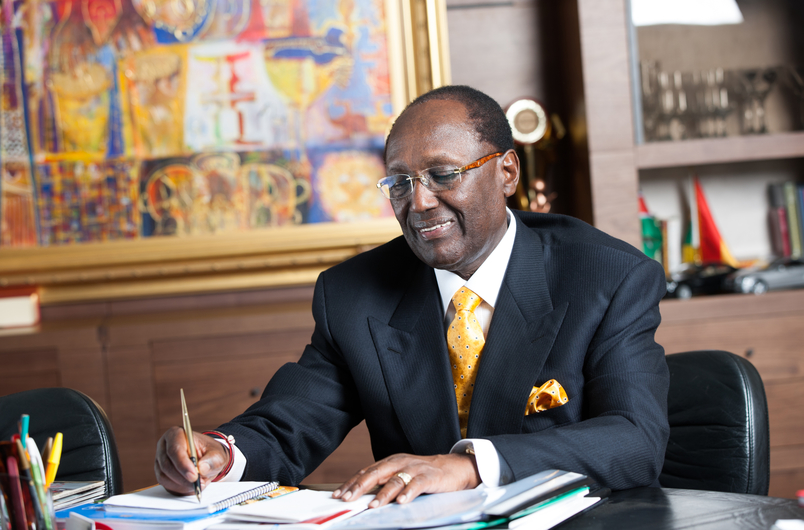


NAIROBI, Kenya, Aug 23 – Two Rivers Mall has long held its place as East Africa’s premier shopping and lifestyle destination. With its striking design, diverse offerings, and strategic location, the mall has become a benchmark for modern urban centres in the region. Yet behind the glossy storefronts and vibrant public spaces lies a deeper story—one rooted in sustainability, community, and forward-thinking strategy.
In an exclusive interview with James Mworia, CEO of Centum Investments, the driving force behind Two Rivers, we explore how the development is positioning itself not only as a retail and entertainment hub, but also as a model of eco-conscious and inclusive urban growth.
The Growth Engine
Mworia credits the mall’s sustained success to a blend of location, diversity, and community integration. Strategically accessible via Limuru Road, the Northern Bypass, and Nairobi’s wider ring road network, Two Rivers draws customers from a broad demographic base. Its tenant mix—ranging from Carrefour and China Square to global fashion retailers like LC Waikiki and Woolworths, plus vibrant dining and entertainment outlets—has kept it relevant in an increasingly competitive retail market.
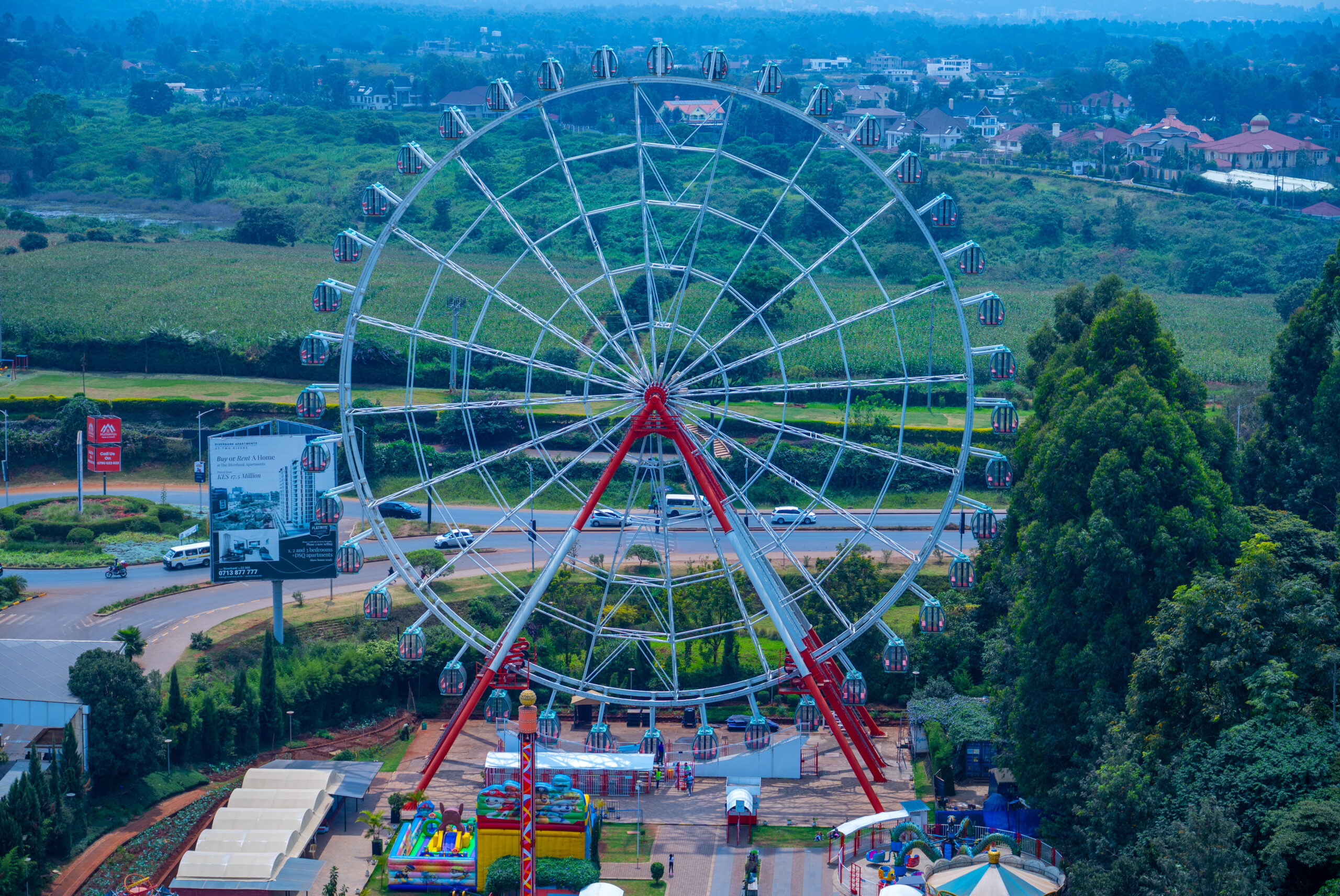
Two Rivers Mall is home to the Eye of Kenya, East Africa’s largest observation wheel.
But what sets the mall apart, Mworia emphasises, is its integration of live, work, and play. “Two Rivers is not just a shopping centre,” he says. “It’s an ecosystem. From residential developments and offices to community events like the Karura Chapel Marathon, we have created an urban environment where people can live, work, shop, and socialise seamlessly.”
Expanding Beyond Retail
The mall is evolving into what Mworia describes as a “comprehensive consumer ecosystem.” New additions such as a state-of-the-art gym, a jogging track, Aga Khan Hospital’s specialist centre, and China Square’s expansive retail outlet reflect this shift. The strategy is to make Two Rivers a one-stop hub, catering to everyday needs while elevating customer experience.
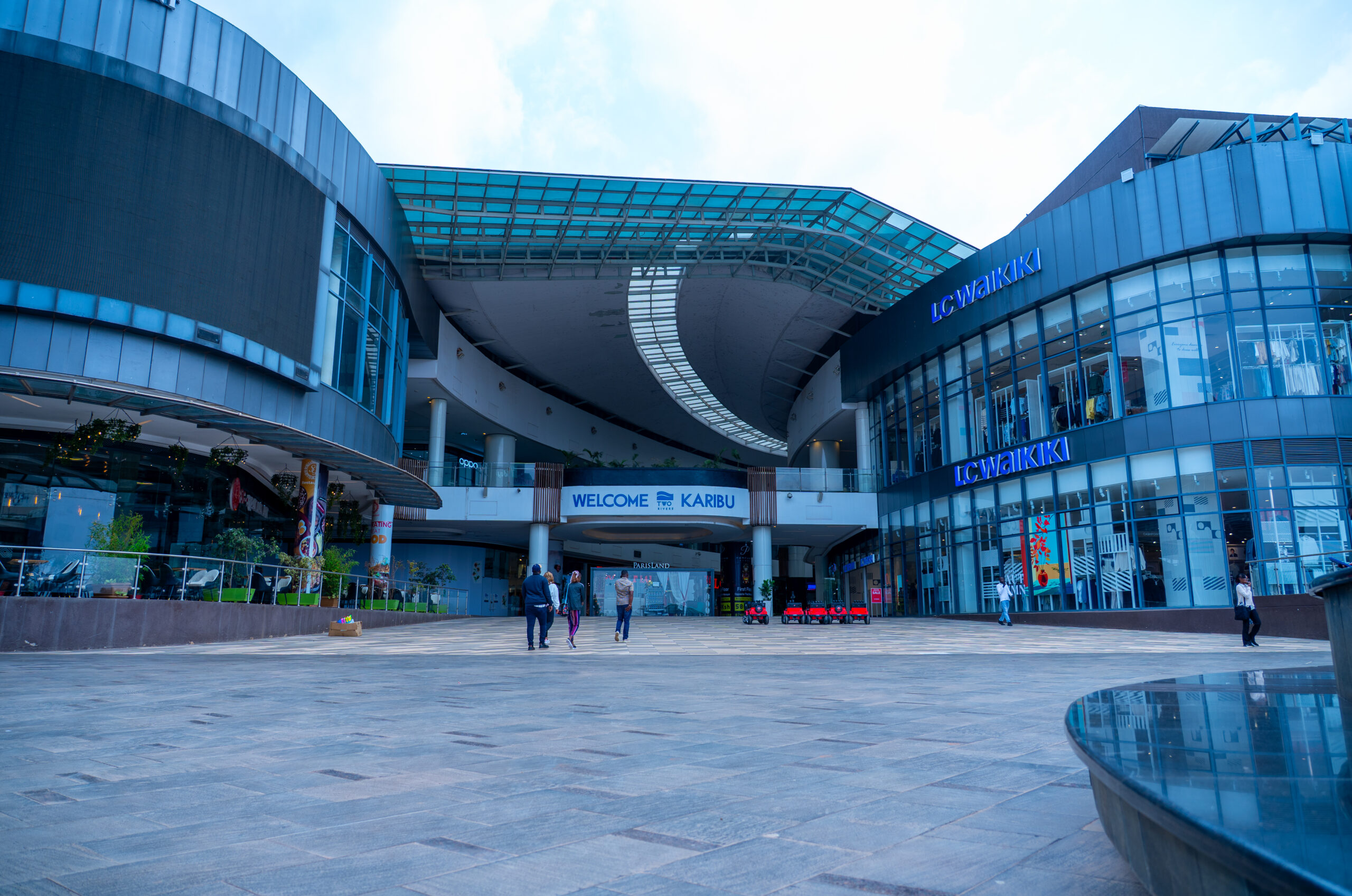
Two Rivers Mall stands as East Africa’s premier shopping and lifestyle destination.
“Modern consumers value convenience and efficiency,” Mworia explains. “By combining healthcare, entertainment, shopping, and residential living in one integrated space, we are responding to how people want to live today.”
Resilience Through Long-Term Vision
The retail sector has not been immune to Kenya’s economic fluctuations, but Centum has steered Two Rivers with a long-term lens. Mworia points to Centum’s sustained management support and strategic oversight as critical to weathering shifts in consumer behaviour.
The results are tangible: over 5,000 direct jobs created, more than 30% of tenants being SMEs, and international brands using Two Rivers as their launchpad into Kenya. “Two Rivers is as much about creating opportunity as it is about business,” Mworia notes.
The SEZ Advantage
A transformative milestone for the development came with the designation of the Two Rivers International Finance & Innovation Centre (TRIFIC) as a Special Economic Zone (SEZ).
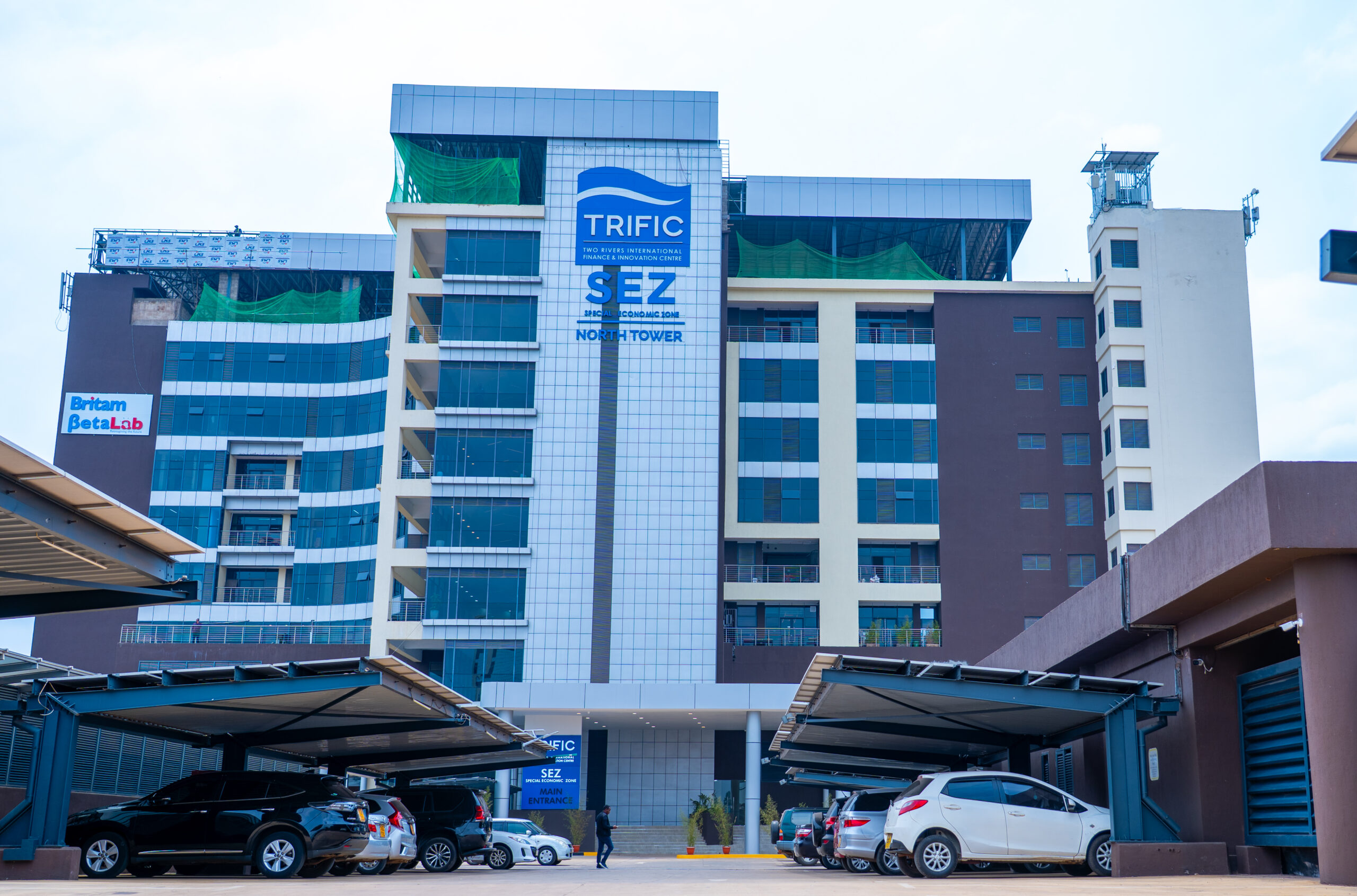
Two Rivers Mall and TRIFIC SEZ—positioning Nairobi as a regional hub for innovation and investment.
This status has unlocked powerful incentives: corporate tax rates as low as 10%, VAT exemptions, and accelerated setup procedures. Combined with world-class infrastructure, the SEZ has made Two Rivers a magnet for regional and global investors.
“TRIFIC is a game-changer,” Mworia says. “It allows tenants to scale faster, reduce costs, and tap into export markets. For Kenya, it drives foreign direct investment, job creation, and skills transfer.”
Sustainability at the Core
Perhaps the most defining aspect of Two Rivers’ future is its sustainability agenda. In February 2025, Centum signed a deal with Distributed Power Africa to expand its solar capacity to 3.2MW, tripling its renewable energy supply.
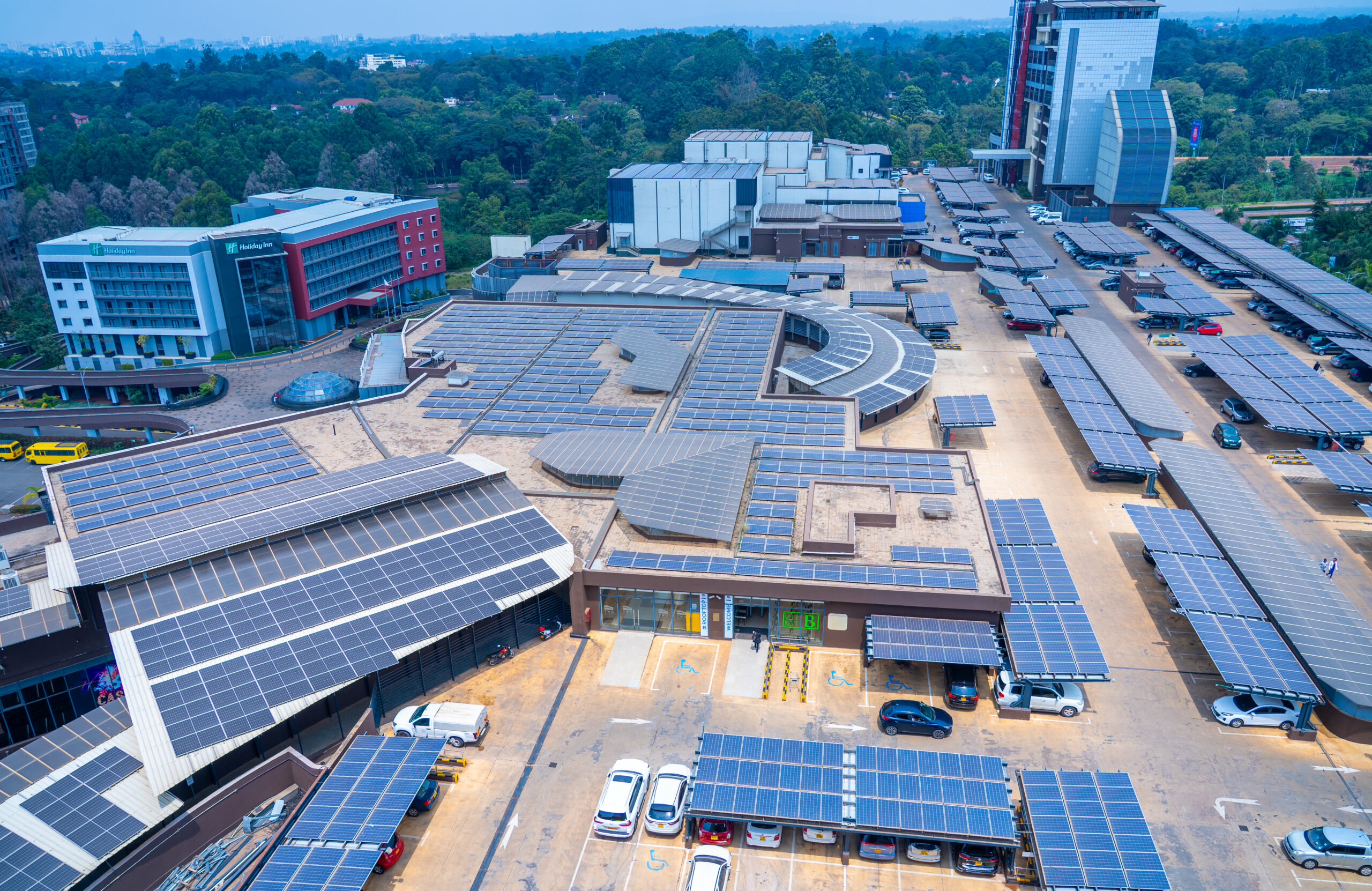
Two Rivers Mall invests in renewable energy with expansive solar installations.
This clean energy initiative is paired with a reverse osmosis plant capable of treating two million litres of water daily—recycling 80% of greywater for landscaping and infrastructure use. Over 30% of the site is dedicated to green spaces, from jogging trails to aqua play areas, designed to improve air quality and wellbeing.
“These are not just add-ons,” Mworia stresses. “They are central to our ESG Strategy and our commitment to net-zero emissions by 2050.”
The mall has also embarked on tree planting, with 3,500 indigenous seedlings already in the ground, while aiming for EDGE green building certification within the year.
A City of the Future
Mworia envisions Two Rivers becoming a smart city over the next decade—anchored by 10,000 residential units and home to more than 30,000 people. With its SEZ designation, sustainability leadership, and integrated live-work-play model, the precinct is designed to remain a regional hub for innovation, investment, and inclusive growth.
“Two Rivers is more than a mall,” Mworia concludes. “It is the future of urban living in Africa—sustainable, inclusive, and globally competitive.”
Also Read:
Two Rivers Mall: Nairobi’s Lifestyle Hub Redefining Urban Living