

























NAIROBI, Kenya, Nov 24 – African states have been urged to embrace the Africa Continental Free Trade Area (AfCTA) agreement to enhance commercial activities.
This was said during the 4th Global Logistics Convention that was held in Nairobi from Wednesday to Thursday.
Participants attended the event to end numerous non-tariff barriers and bottlenecks affecting the supply chain in Africa.
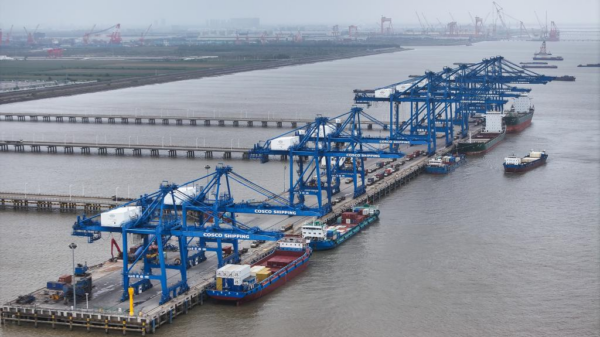
With the theme, ‘Connecting Continents: Strengthening Global Supply Chains’, the convention sought to highlight how different players are harnessing the opportunities under the AfCTA.
It also highlighted how the logistics sector is embracing technology and the role of transport and logistics service providers in promoting green logistics.
Freight logix Kenya Managing Director (MD) George Kidenda said to increase free trade on the continent in the next 10 years, African governments target cutting up to 97 percent of the tariffs to zero, thus enabling different players to enter and trade in new markets.
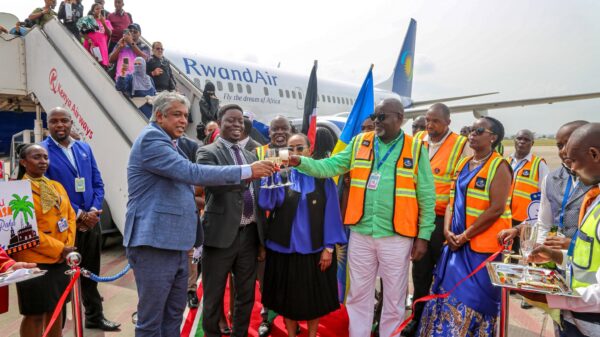
“We need proper infrastructure and free movement of cargo to effect this. Most of our roads do not cross effectively into other countries in Africa. Our airlines do not have free landing rights. We need to come together to improve intra-africa trade,” Kidenda said.
Kidenda noted that African leaders now target having a free trade area by 2063.
He called for proper infrastructure to make the free trade area a success.
The MD said roads and rail links should be constructed to cross into other African countries.
“The challenges we face in Africa is that there is no network connectivity,” Kidenda added.
KQ Head of Cargo Commercial Peter Musola, speaking at the convention, emphasized the need for the liberalization of trade in Africa.
“One of the major challenges in Africa is the issue of uni-directional demand. Flights or sea freight vessels will go one direction full and they come back empty and this has the effect of increasing the unit price. All the elements of the liberalization of trade will stimulate trade within the continent and the more we have bidirectional movement of cargo, the prices will naturally come down,” Musola said.
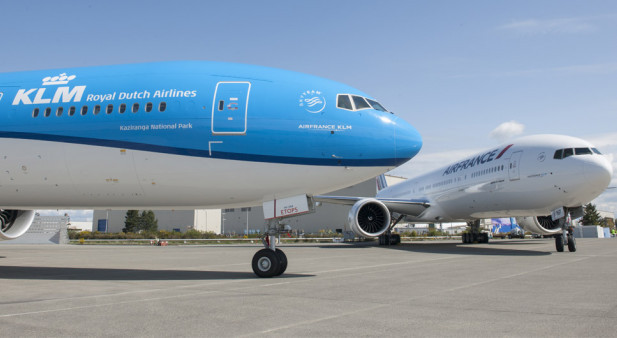
According to the UNCTA Report of 2021, 90 percent of freight cargo in Africa is handled by international cargo airlines, leaving only 10 percent to local airlines.
Inland Africa Logistics Managing Director Roy Mwanthi said the new policies in terms of taxation in Kenya have slowed down imports into the country.
“We have seen a slight drop in cargo importation. But we are confident in the next few months it will pick up and importation levels will return to where they were,” Mwanthi said.
He said importation is affected by the entire logistics chain, which he said ought to be cheap to encourage the movement of goods.
“If we work together as logistics suppliers and make the cost of importation cheaper for Kenya and for East Africa then we have done our part,” he said.
Mwanthi noted that this is the first ever logistics conference held by the Kenya International Freight and Warehousing Association in Kenya.
The Global Logistics Convention is an annual freight logistics event of the Federation of East African Freight Forwarders Associations (FEAFFA).
The Convention was held successfully first in Tanzania in 2017, in Kampala, Uganda, in 2018, and in Kigali, Rwanda, in 2019.
This year, the summit was organized and hosted by the Kenya International Freight and Warehousing Association (KIFWA) and FEAFFA in partnership with various Kenyan government agencies and other private sector organizations.